Google Gemini 4 Argon that beat OpenAI Astra, Anthropic Fable 5.1, and Opus 5.5.
New model by Google: Gemini 4 Argon that beat OpenAI Astra, Anthropic Fable 5.1, and Opus 5.5.

For the past two years, Apple has been under immense pressure.
While competitors like OpenAI, Google, Anthropic, and Microsoft raced ahead with increasingly capable AI assistants, Apple appeared cautious—sometimes frustratingly so.
After promising a revolutionary Siri experience in 2024 and facing criticism over delays, missing features, and growing skepticism around Apple Intelligence, WWDC 2026 became more than just another developer conference.
It became Apple's opportunity to prove that it still has a place in the AI race.
And after watching the entire keynote, one thing is clear:
Apple didn't try to build the smartest AI.
Apple tried to build the most integrated AI.
The result is a surprisingly mature vision of artificial intelligence that focuses less on flashy demos and more on making everyday interactions feel natural.

Suggested Alt Text: Apple WWDC 2026
Many expected Apple to announce a groundbreaking AI model capable of competing directly with ChatGPT, Gemini, or Claude.
That didn't happen.
Instead, Apple focused on three major themes:
A completely redesigned Siri
Deep AI integration across the ecosystem
Massive performance and usability improvements
And honestly, that may have been the smarter move.
For years, Siri felt stuck in another era.
While modern AI assistants could reason, remember context, understand images, and perform complex tasks, Siri often struggled with basic requests.
WWDC 2026 changes that.
One of the biggest upgrades is contextual awareness.
Instead of treating every request independently, Siri can now maintain conversation flow.
You can ask:
"When is Coldplay performing in Milan?"
Then follow up with:
"Can you help me get tickets?"
Without repeating the subject.
This sounds simple, but it represents one of the most important improvements in AI usability.
Apple introduced screen awareness.
Imagine viewing a photograph and asking:
"Where was this taken?"
Without manually describing the image.
Siri understands what you're looking at and responds accordingly.
This dramatically reduces friction between users and AI.
Apple is now allowing Siri to understand information from:
Messages
Photos
Notes
Files
Documents
Emails
Because Apple has rebuilt indexing throughout the operating system, Siri can surface relevant information exactly when needed.
This moves Siri from being a command processor into becoming a true personal assistant.
One of the most impressive aspects wasn't intelligence.
It was design.
Apple integrated Siri directly into the Dynamic Island experience.
The interaction feels native to the hardware rather than an app sitting on top of it.
This is classic Apple:
AI isn't presented as a separate product.
It becomes part of the operating system itself.
Hidden among the major announcements was arguably the most transformative update.
For years, Shortcuts has been one of the most powerful features in iOS.
Unfortunately, it has also been intimidating.
Now users can simply describe what they want.
"Automatically text my partner whenever I leave work and include my ETA."
Instead of building workflows manually, Siri creates the automation.
This could introduce millions of users to automation for the first time.

The next generation of Apple Intelligence isn't waiting for commands.
Instead, it's beginning to anticipate needs.
Examples shown include:
Someone messages you about a trip.
Apple Intelligence automatically surfaces related photos.
An email mentions dinner reservations.
Apple suggests adding them to your calendar instantly.
During a phone call with an airline:
Apple can retrieve booking information and confirmation numbers automatically.
This is very similar to Google's proactive AI initiatives but executed with Apple's privacy-first philosophy.
Apple's Visual Intelligence is now integrated directly into the Camera app.
This makes significantly more sense than the previous implementation.
Point your camera at a meal.
Apple Intelligence can provide:
Nutritional information
Calorie estimates
Ingredient breakdowns
Scan a restaurant receipt.
The system can:
Calculate shares
Generate payment requests
Send money through Apple Cash
Small feature.
Huge convenience.
Visual Intelligence can identify and translate text in real time.
This becomes especially useful for:
Travelers
International students
Expats
Business professionals

Apple isn't limiting AI to iPhones.
The company announced expansion across its entire ecosystem.
The fastest way to interact with Siri may now be your wrist.
Quick contextual interactions make far more sense on a watch than opening an app on a phone.
One of the most futuristic demonstrations involved Vision Pro.
Siri can now understand:
Virtual windows
Browser tabs
Physical objects
Real-world environments
Simultaneously.
This represents one of the clearest examples of spatial computing enhanced by AI.
Mac users gain:
AI-powered Spotlight
Document understanding
Content extraction
File comparison
Calendar automation
While useful, these features feel less revolutionary because Mac users already have access to advanced AI tools.
One announcement deserves more attention than it received.
Apple claims major improvements to:
Speech recognition
Punctuation
Spelling
Text prediction
This may sound boring.
It's actually one of the most impactful updates of the event.
People don't necessarily want AI to write for them.
They want technology that helps them communicate accurately.
Better dictation impacts:
Messages
Emails
Notes
Reminders
Siri interactions
CarPlay
Every single day.
Apple Home received a surprisingly powerful upgrade.
AI can now:
Analyze security footage
Identify important moments
Group events
Create summaries
Instead of watching hours of recordings, users receive intelligent summaries.
This could save homeowners enormous amounts of time.
Not everything was AI.
Apple spent significant time discussing optimization.
Reported improvements include:
Feature | Improvement |
|---|---|
App Launching | Up to 30% Faster |
Photo Processing | Up to 70% Faster |
AirDrop Transfers | Up to 80% Faster |
Search & Indexing | Significantly Improved |
These aren't flashy features.
They're the kinds of improvements users feel every day.
Not every announcement landed successfully.
Apple showcased major upgrades to:
Image Playground
AI-generated wallpapers
AI-generated contact posters
Image expansion
Spatial reframing
Technically impressive.
Emotionally questionable.
Many generated examples still carried the familiar AI aesthetic:
Slightly uncanny
Overly polished
Artificial feeling
The technology is improving.
But the creative value remains debatable.
Most companies are competing to build better models.
Apple is competing to build a better ecosystem.
The company's advantage isn't necessarily intelligence.
It's integration.
Consider this:
Siri understands your messages
Your photos
Your calendar
Your files
Your calls
Your devices
And it does so within a unified ecosystem that billions already use.
This may ultimately matter more than having the smartest chatbot.
There are important limitations.
Apple confirmed that the most advanced Siri experience requires the newest hardware.
Many older devices will receive updates.
But the flagship AI capabilities remain restricted.
This mirrors what we've seen across the entire AI industry.
Powerful AI requires powerful hardware.
Apple also hinted that some advanced AI features may have usage limits.
Heavy usage could require:
iCloud+ subscriptions
Additional AI processing allowances
Premium tiers
Apple hasn't fully clarified pricing yet.
But this could become a major discussion point moving forward.
WWDC 2026 wasn't Apple's "ChatGPT moment."
It wasn't a dramatic leap that suddenly placed Apple years ahead of everyone else.
Instead, it was something arguably more important.
Apple finally delivered a believable vision of AI that feels integrated, useful, and practical.
Siri is no longer embarrassing.
Apple Intelligence is no longer a vague promise.
And the ecosystem now feels prepared for a future where AI is present in every interaction.
Will Apple lead the AI race?
Probably not.
But after WWDC 2026, it doesn't look like it's falling behind anymore.
✅ Siri finally gains modern AI capabilities
✅ Context-aware conversations arrive
✅ AI-powered shortcuts are a game changer
✅ Visual Intelligence becomes genuinely useful
✅ Major improvements to dictation and speech recognition
✅ Apple Home gains intelligent video summaries
✅ AI now spans iPhone, Mac, Watch, and Vision Pro
⚠️ Advanced features require newer devices
⚠️ Some AI functionality may eventually require subscriptions
Was this helpful?
Give it a zap to let me know.
Or share it with someone
New model by Google: Gemini 4 Argon that beat OpenAI Astra, Anthropic Fable 5.1, and Opus 5.5.
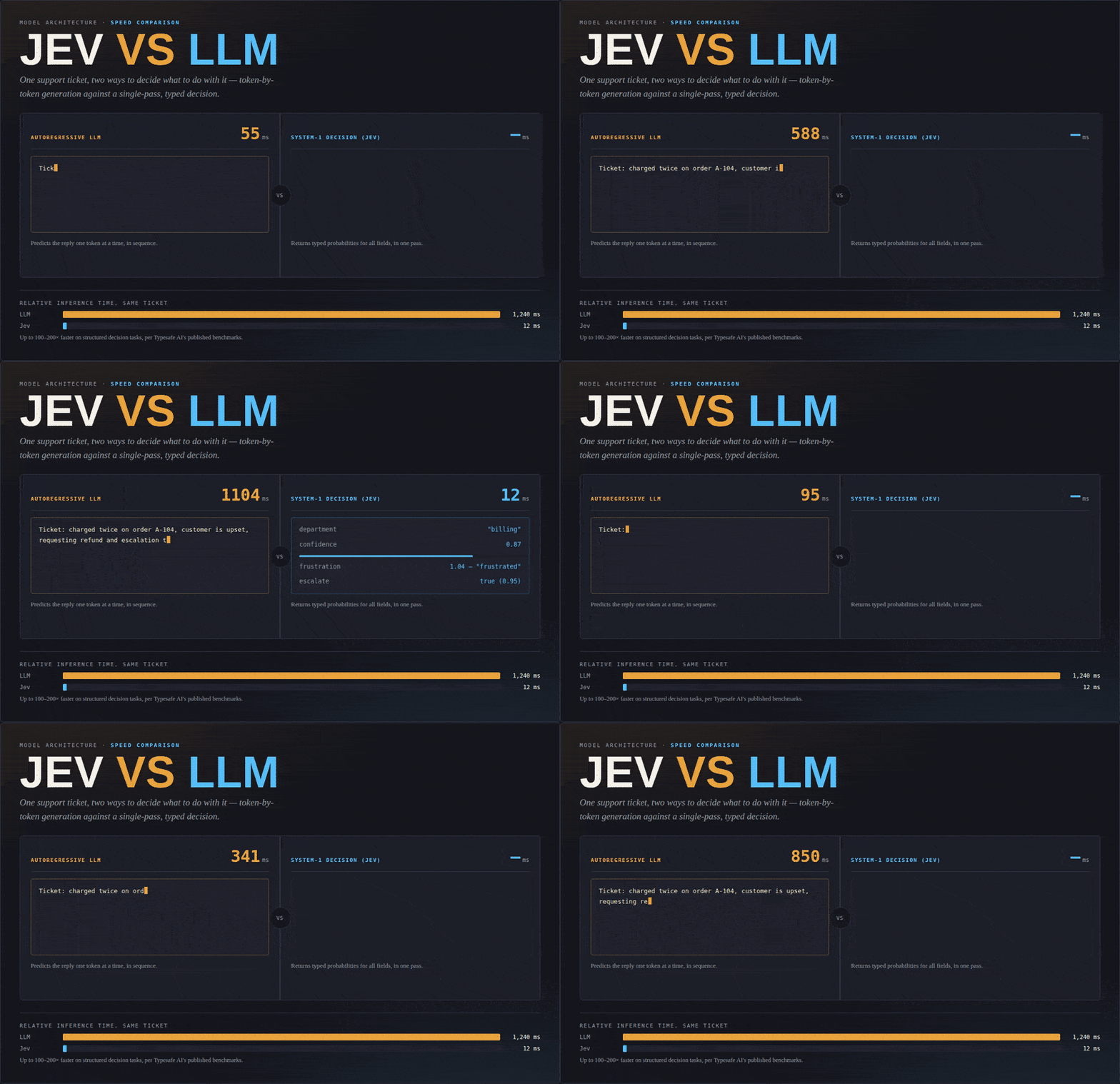
Why TypeSafe AI’s new “System One” model is fast, inexpensive and potentially important—and where its limitations begin.
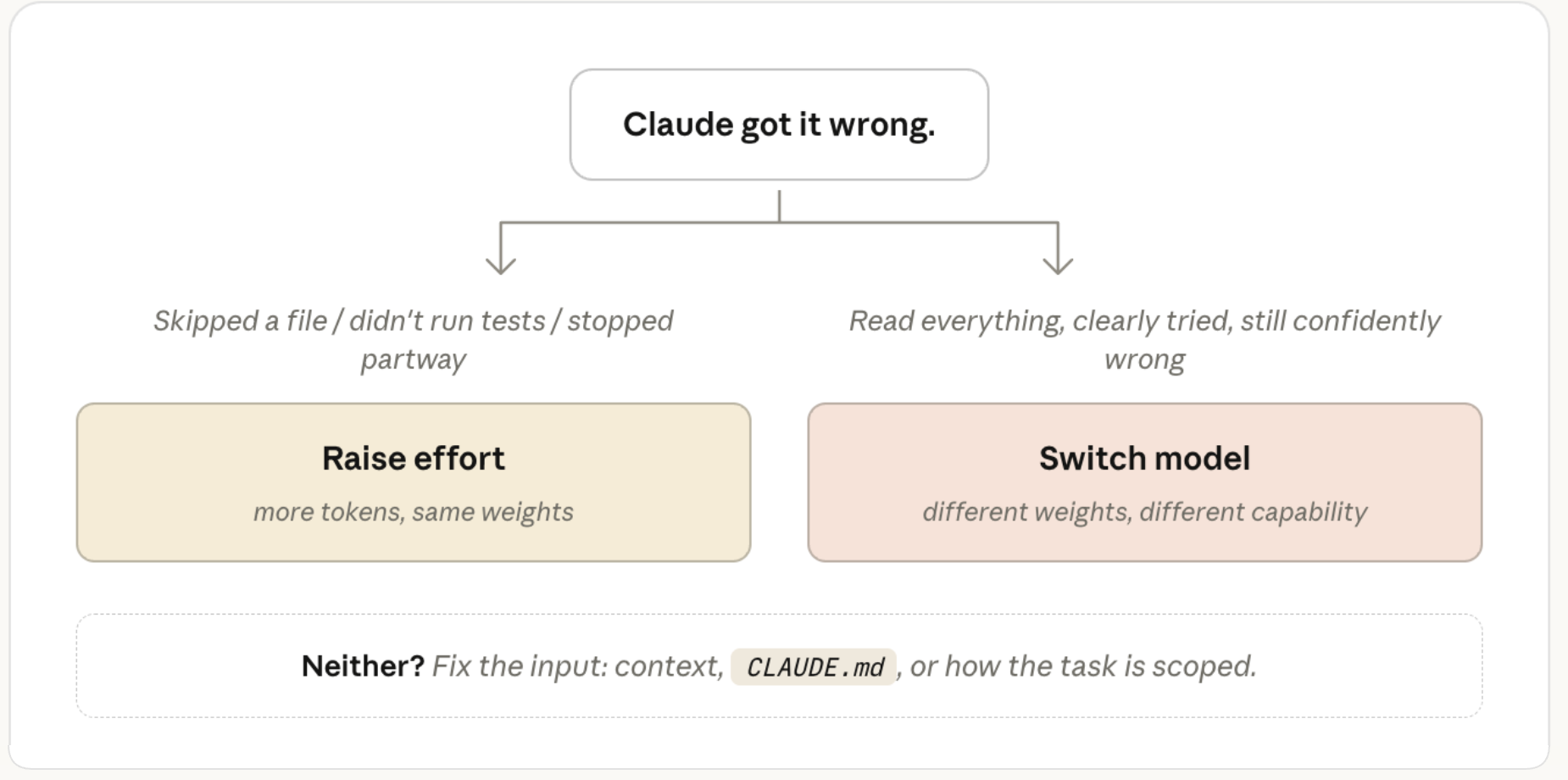
Model selection and effort level solve different problems. The model controls Claude’s underlying capability; the effort level controls how much work Claude does before responding.