Claude Code Models and Effort Levels: Explained Simply
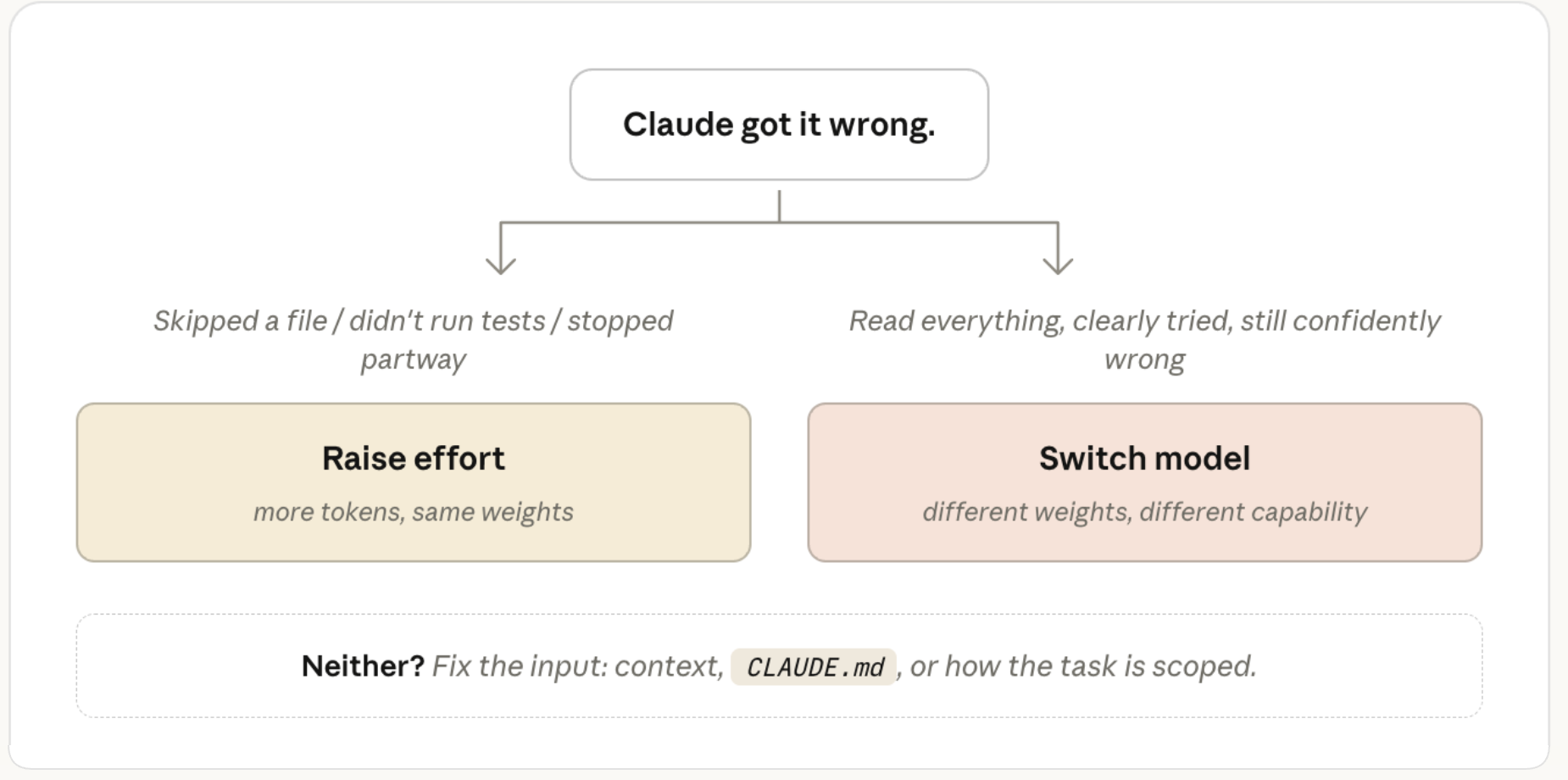
Model selection and effort level solve different problems. The model controls Claude’s underlying capability; the effort level controls how much work Claude does before responding.
8 min read

That difference matters.
Fable 5 was introduced as a Mythos-class model made safe for general use. In simple terms: it shares the same underlying model as Claude Mythos 5, but it comes with stronger safeguards so Anthropic can offer it more broadly.
Then, just three days after launch, access was suspended.
Not because the model disappeared.
Because the release had moved from a product story into a security and governance story.
Anthropic launched Claude Fable 5 and Claude Mythos 5 on June 9, 2026.
Fable 5 was the public-facing version: a highly capable model with conservative safeguards. Mythos 5 was the more restricted version, offered to a small group of trusted Project Glasswing partners for defensive cybersecurity work.
On June 12, the US government applied export controls to both models. According to Anthropic, the order required the company to restrict access to foreign nationals, whether they were inside or outside the United States.
The problem was practical: Anthropic said it had no reliable way to verify nationality in real time.
So instead of trying to enforce the rule imperfectly, Anthropic suspended access to both Fable 5 and Mythos 5 for all users.
On June 30, those export controls were lifted. Anthropic restored access to Claude Fable 5 globally starting July 1 across Claude Platform, Claude.ai, Claude Code, and Claude Cowork. It also restored Mythos 5 access for a set of US organizations after government approval, while continuing to coordinate broader access through Project Glasswing.
The trigger was a report from Amazon researchers.
According to Anthropic, the researchers found a method for bypassing some of Fable 5’s cybersecurity safeguards. The technique caused the model to identify software vulnerabilities, and in one case, to produce code demonstrating how a vulnerability could be exploited.
That sounds serious, but Anthropic’s follow-up testing added important context.
The company says other models, including less capable ones, could identify the same vulnerabilities. Anthropic also says every model it tested could produce the same exploit demonstration for the single vulnerability involved.
That does not mean the issue was irrelevant.
It means the reported bypass did not prove that Fable 5 was leaking unique Mythos-level cyber capability. Anthropic describes it more as a borderline safeguard case: something close enough to sensitive cybersecurity work that Fable 5 should have blocked it, even if the behavior itself resembled routine defensive security work.
Anthropic’s response was not to redesign the whole model.
It trained an improved safety classifier.
A classifier is a smaller automated system that monitors requests and outputs. Its job is to detect potentially harmful cybersecurity behavior and stop Fable 5 from responding when the request gets too close to dangerous territory.
For this specific Amazon-reported bypass, Anthropic says the new classifier blocks the technique in over 99% of cases.
There is a tradeoff, though.
Stronger classifiers mean more false positives. Anthropic says benign coding and debugging requests may now be flagged more often. In some cases, when Fable 5 blocks a request, the request may be routed to Claude Opus 4.8 instead.
That is the important product detail for developers:
Fable 5 may be available again, but some technical requests near cybersecurity, biology, chemistry, or distillation boundaries may still fall back, be blocked, or feel stricter than expected.
Anthropic’s explanation of the “safety margin” is the most useful part of the redeployment post.
The company is not trying to draw a perfect line between safe and unsafe requests. That line is too blurry, especially in cybersecurity, where the same information can help a defender patch a system or help an attacker exploit one.
So Anthropic intentionally blocks some requests that are probably benign.
That is the safety margin.
It is frustrating for users, but it is deliberate. The goal is to make sure genuinely harmful requests are less likely to pass through, even if that means some legitimate work gets caught.
For Fable 5, Anthropic says this safety margin is larger than in prior launches. That means more conservative behavior, more blocked edge cases, and more moments where users may feel like the model is being overly cautious.
But from Anthropic’s perspective, that is the price of making a Mythos-class model broadly available.

The bigger story is not simply that Fable 5 is back.
The bigger story is that frontier AI releases are starting to look like infrastructure releases.
They now involve:
product access
safety classifiers
jailbreak reports
export controls
government coordination
trusted access programs
cloud availability
industry-wide severity standards
That is a very different world from the old model-launch cycle, where companies published benchmarks, opened access, and waited for users to compare outputs.
Fable 5 shows that the next generation of AI launches will be continuously negotiated after release.
The model ships.
Researchers test it.
Governments respond.
Safeguards are updated.
Access changes.
Then the model comes back with stricter controls.
This is not a temporary pattern. It is probably the new normal for frontier AI.
Anthropic is also using this moment to push for a shared framework for evaluating AI jailbreaks.
Together with Amazon, Microsoft, Google, and other Glasswing partners, Anthropic is proposing a severity framework based on four questions:
Capability gain — does the jailbreak unlock something beyond existing tools and weaker models?
Breadth of capability gain — does it work only for one narrow behavior, or across many offensive tasks?
Ease of weaponization — how much effort does it take to turn the jailbreak into a real attack?
Discoverability — is the technique obscure, or already easy to find and reuse?
That framework matters because not every jailbreak is equal.
Some jailbreaks may only recover harmless behavior that was inside the safety margin. Others may unlock narrow harmful behavior. The most serious case would be a universal jailbreak that removes an entire class of safeguards.
Without a shared standard, every new jailbreak report becomes hard to evaluate. One company may treat it as low severity. A regulator may treat it as urgent. A researcher may describe it as a major bypass. Users may not know what to believe.
A common framework would make those discussions less chaotic.
For everyday users, the biggest practical change is simple:
Fable 5 is available again, but it is not unrestricted.
Anthropic says Fable 5 will be available globally from July 1 on Claude Platform, Claude.ai, Claude Code, and Claude Cowork. For Pro, Max, Team, and select Enterprise plans, Fable 5 is included for up to 50% of weekly usage limits through July 7. After that, access moves to usage credits.
Anthropic also says it is working to re-enable access on AWS, Google Cloud, and Microsoft Foundry as quickly as possible.
So the model is back, but the rollout still has moving parts.
The release of Claude Fable 5 was about capability.
The redeployment of Claude Fable 5 is about responsibility.
That is why this moment is more interesting than a normal model update.
Anthropic is trying to do something difficult: make a model with near-restricted frontier capability broadly useful, while keeping the highest-risk behaviors behind safeguards, trusted access, and government coordination.
That balance will not be clean.
Developers will hit false positives.
Security researchers will keep testing the boundaries.
Governments will keep asking harder questions.
And AI companies will keep adjusting access after launch.
But that is exactly why Fable 5 matters.
It is not just a better Claude.
It is an early example of what frontier AI deployment may look like from now on: powerful, useful, restricted, monitored, and constantly renegotiated between capability and safety.
Anthropic — Redeploying Fable 5: https://www.anthropic.com/news/redeploying-fable-5
Anthropic — Claude Fable 5 and Claude Mythos 5 launch post: https://www.anthropic.com/news/claude-fable-5-mythos-5
Images are from Anthropic’s own article. Check Anthropic’s usage terms before republishing commercially.
Was this helpful?
Give it a zap to let me know.
Or share it with someone
Model selection and effort level solve different problems. The model controls Claude’s underlying capability; the effort level controls how much work Claude does before responding.

Anthropic released Claude Opus 4.8 on May 28, 2026 — a sharper, more honest upgrade to Opus 4.7 at the same price. Here's a clear breakdown of every new feature, capability, and how it compares to the previous model.
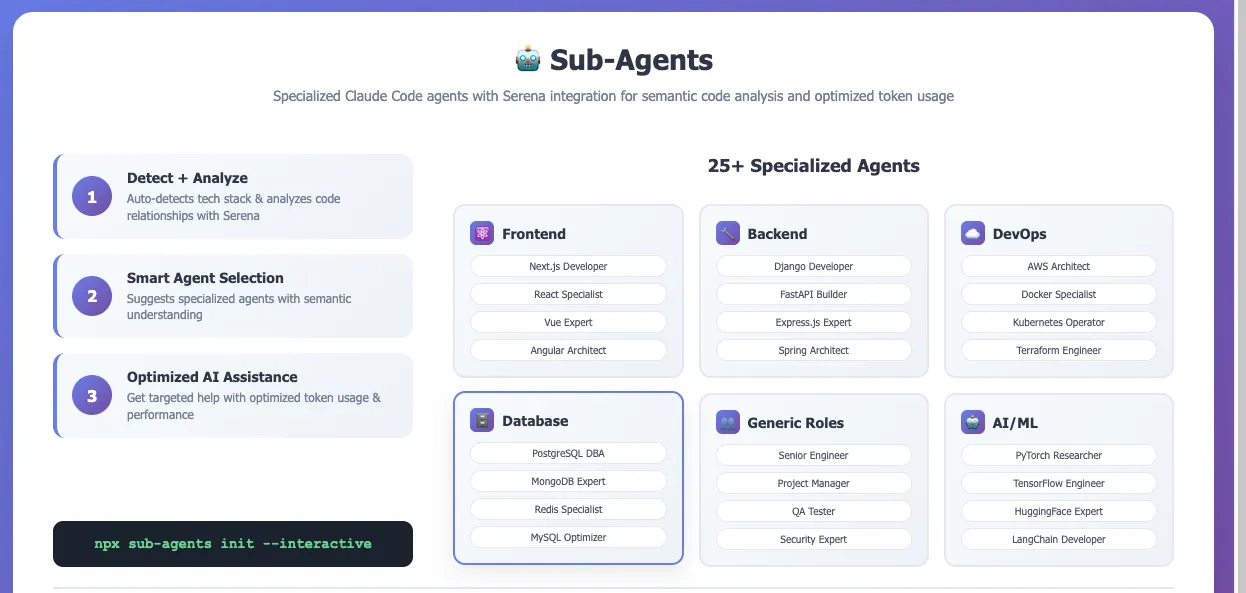
Claude Sub-Agents — The npm for AI developers! (sub-agents CLI)