Every business shares the same quiet leak: the phone rings when no one can answer it. A patient wants to move an appointment after the clinic closes. A diner calls during the dinner rush and gets a busy tone. Someone has one question before they buy — and a missed call quietly becomes a lost customer. It happens in medical practices, restaurants, shops, salons, real-estate agencies, utilities, and support desks alike.
yourang is the platform I work on that answers that phone. It's an AI telephone agent that picks up in a natural human voice, around the clock, and actually gets things done — booking, ordering, answering, routing — for any kind of business. As the team likes to put it: it never sleeps and never gets sick.
This post is a tour of what it can do, and a look under the hood at how it's built.
Far more than a receptionist
It's tempting to file an "AI that answers the phone" under hospitality. yourang is deliberately horizontal — the same engine adapts to very different businesses, each with its own script, vocabulary, and rules. It's already used across more than ten verticals:
Medical practices — triage, appointment booking, and after-hours coverage
Restaurants — reservations and phone orders, even at peak
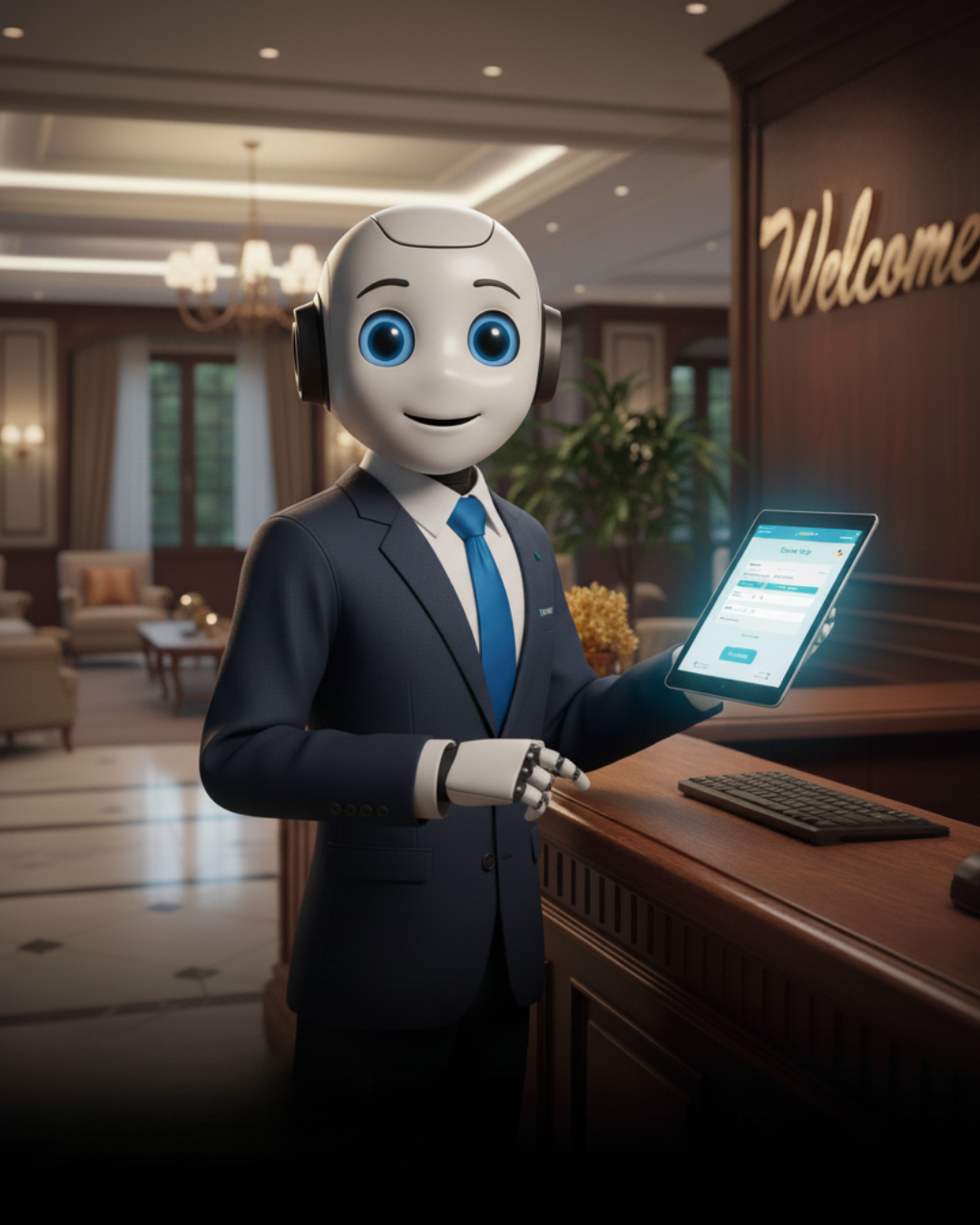
Hotels & receptions — bookings and guest questions 24/7
Retail & clothing — stock checks, store info, and upsell
Hair & beauty salons — scheduling and reminders
Real estate — qualifying callers and booking viewings
Utilities (gas & power) — high-volume customer requests
Technical support & customer care — guided troubleshooting and complaint capture
HR departments — fielding candidate and employee calls
What it does on every call
yourang sits between a business's phone number and its callers. It doesn't read from a rigid "press 1 for bookings" menu — it holds a real conversation and takes action.
Answers and handles calls
Natural, conversational speech; multiple simultaneous calls; live transcription; and intelligent routing to the right person or department. In production, the assistant resolves the large majority of calls end-to-end without a human ever picking up.
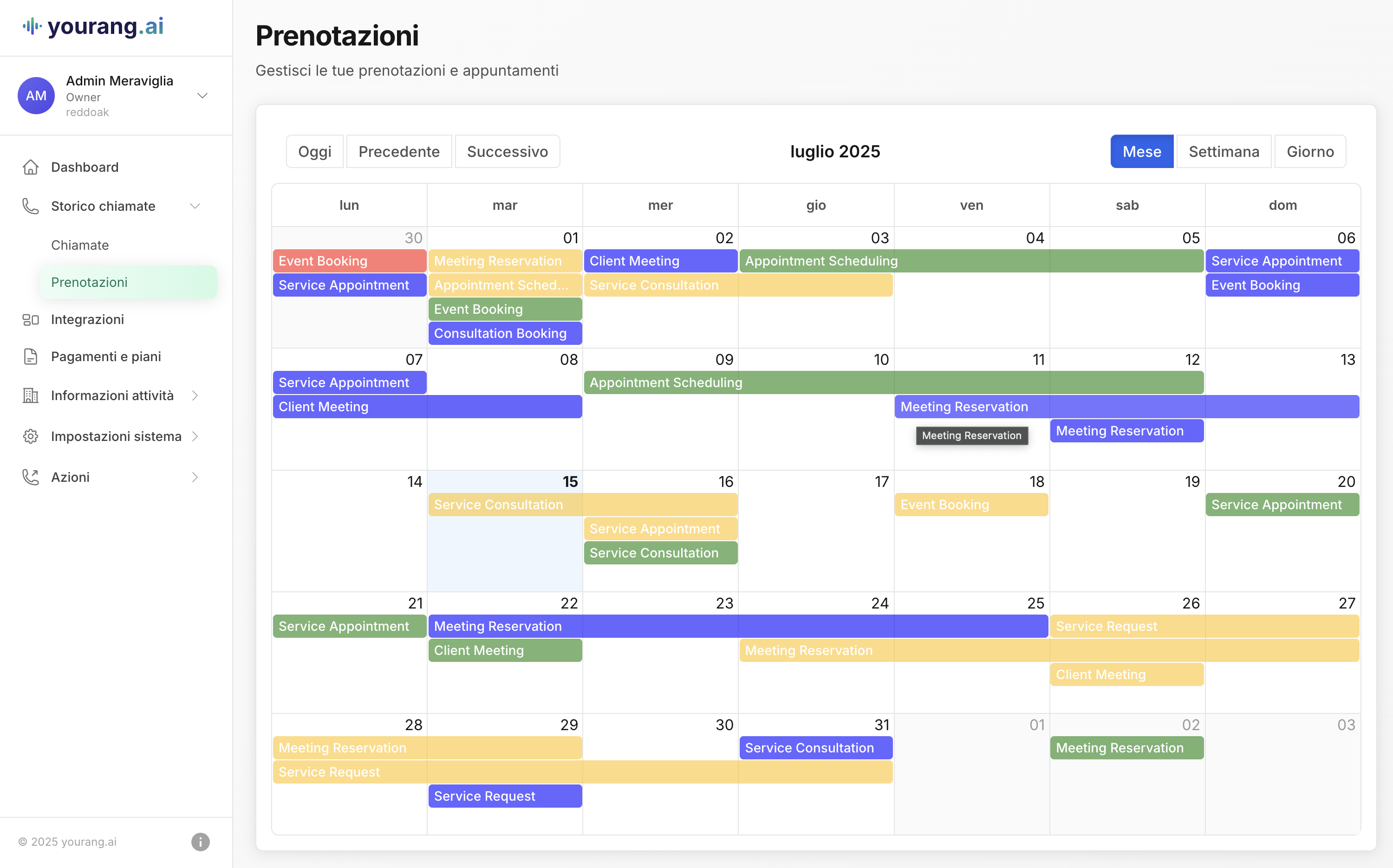
Books appointments and reservations
Two-way Google Calendar sync keeps the business's existing schedule as the single source of truth. The agent checks real availability, suggests slots, sends reminders, and handles cancellations — businesses report meaningfully higher booking conversion once calls stop going unanswered.
Takes orders and runs actions
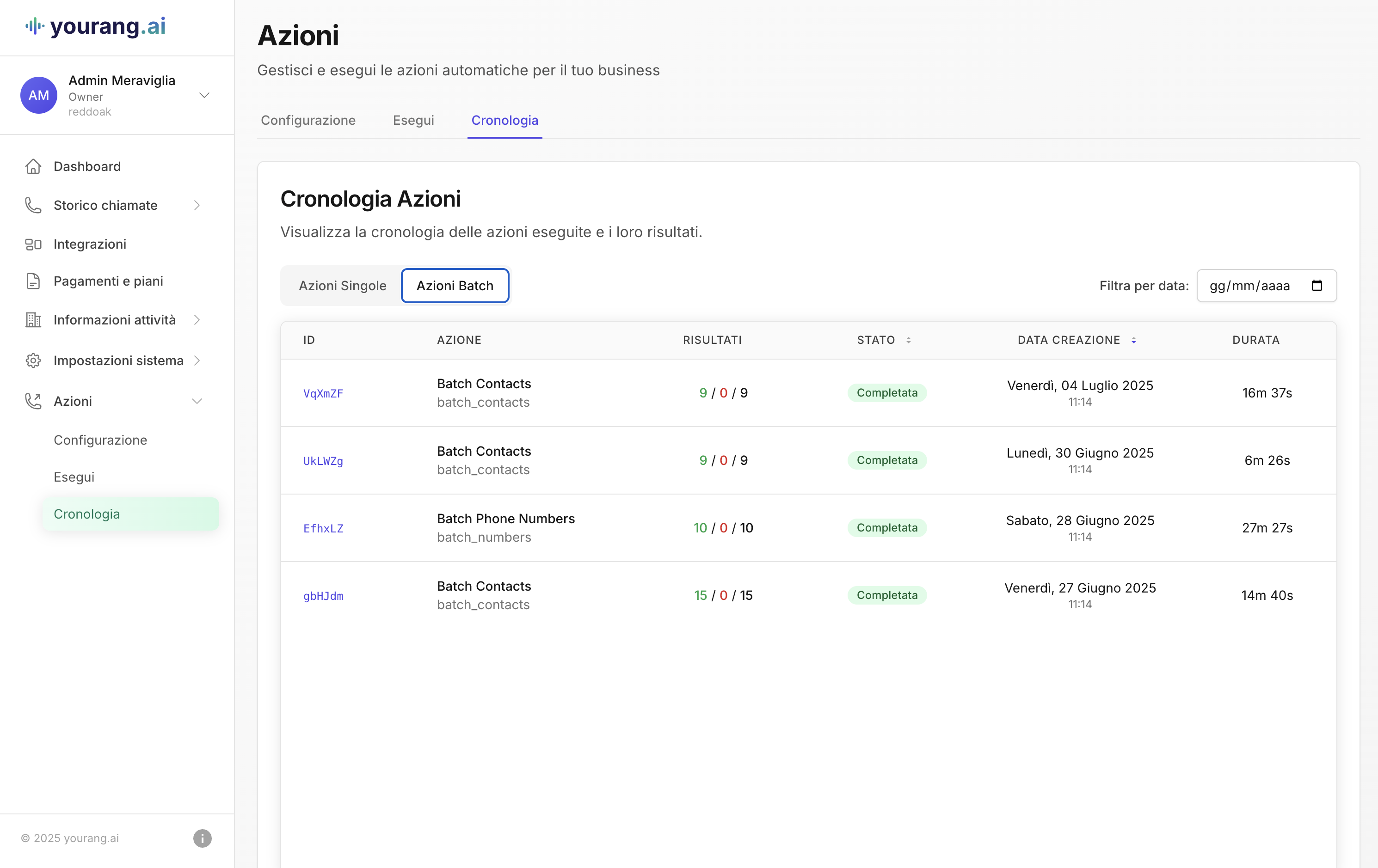
Beyond talking, yourang does things. It can take an order with contextual understanding of variations and ingredients, suggest upsells, verify availability in real time, and trigger configured actions — sending an SMS or email, transferring a call, or kicking off a follow-up — all from the conversation.
Resolves support — and knows when to step back
For support calls it resolves frequent requests on its own, walks callers through guided troubleshooting, and documents complaints in detail. When a conversation genuinely needs a person, it transfers to a human operator with the full context and transcript already in hand — no "can you repeat everything from the start."
Tuned to each business
None of this works as one generic bot. yourang is configured per business:
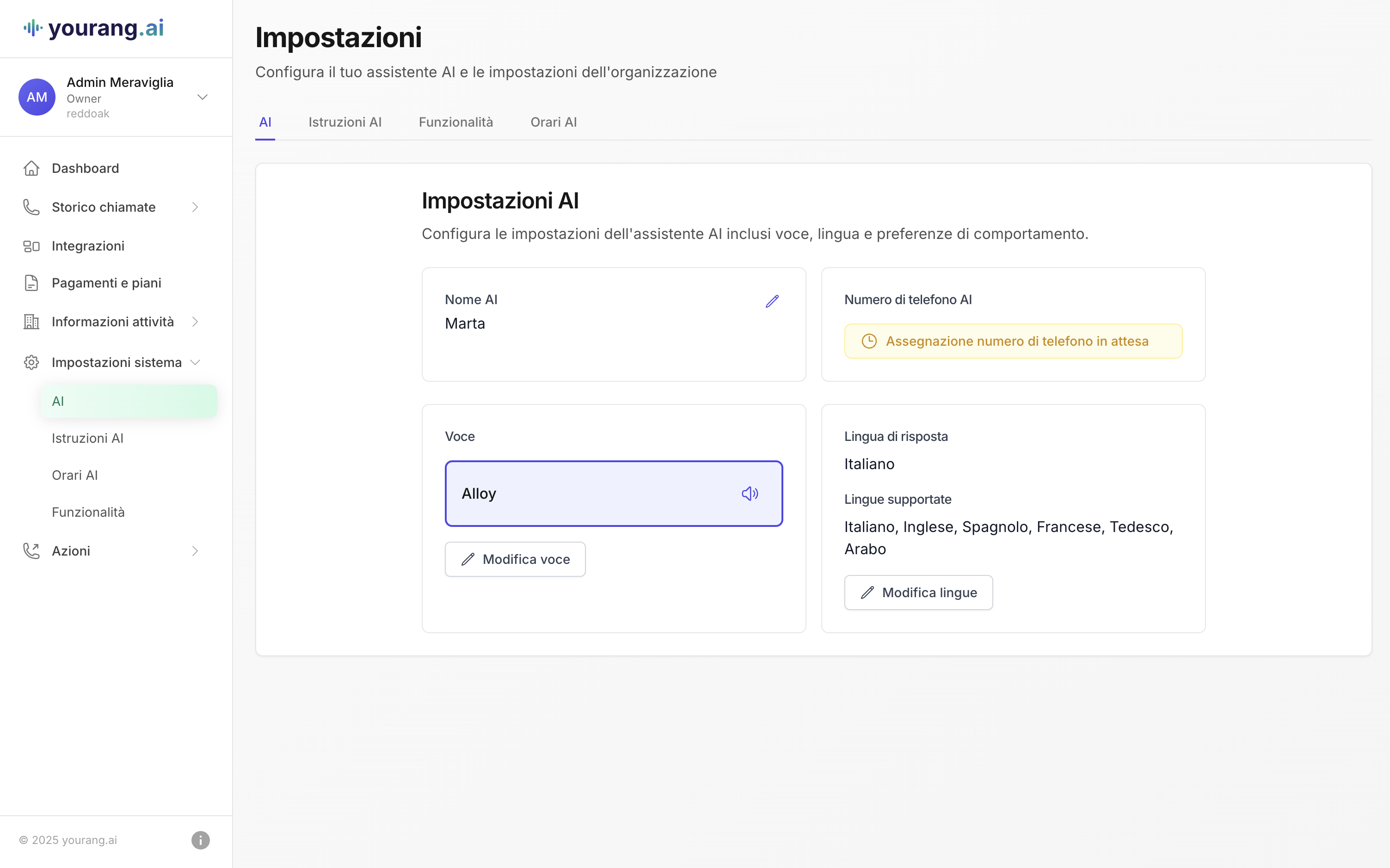
Voices & languages — realistic voices with native-like multilingual fluency
Activation windows — always-on, after-hours only, or just at peak times, with holiday and event rules
Routing logic — criteria for what the AI handles autonomously vs. what escalates, and to whom
Custom scripts — industry-specific conversation paths and question frameworks
Operator app — live monitoring, full transcripts, and seamless takeover mid-call
Everything is measurable
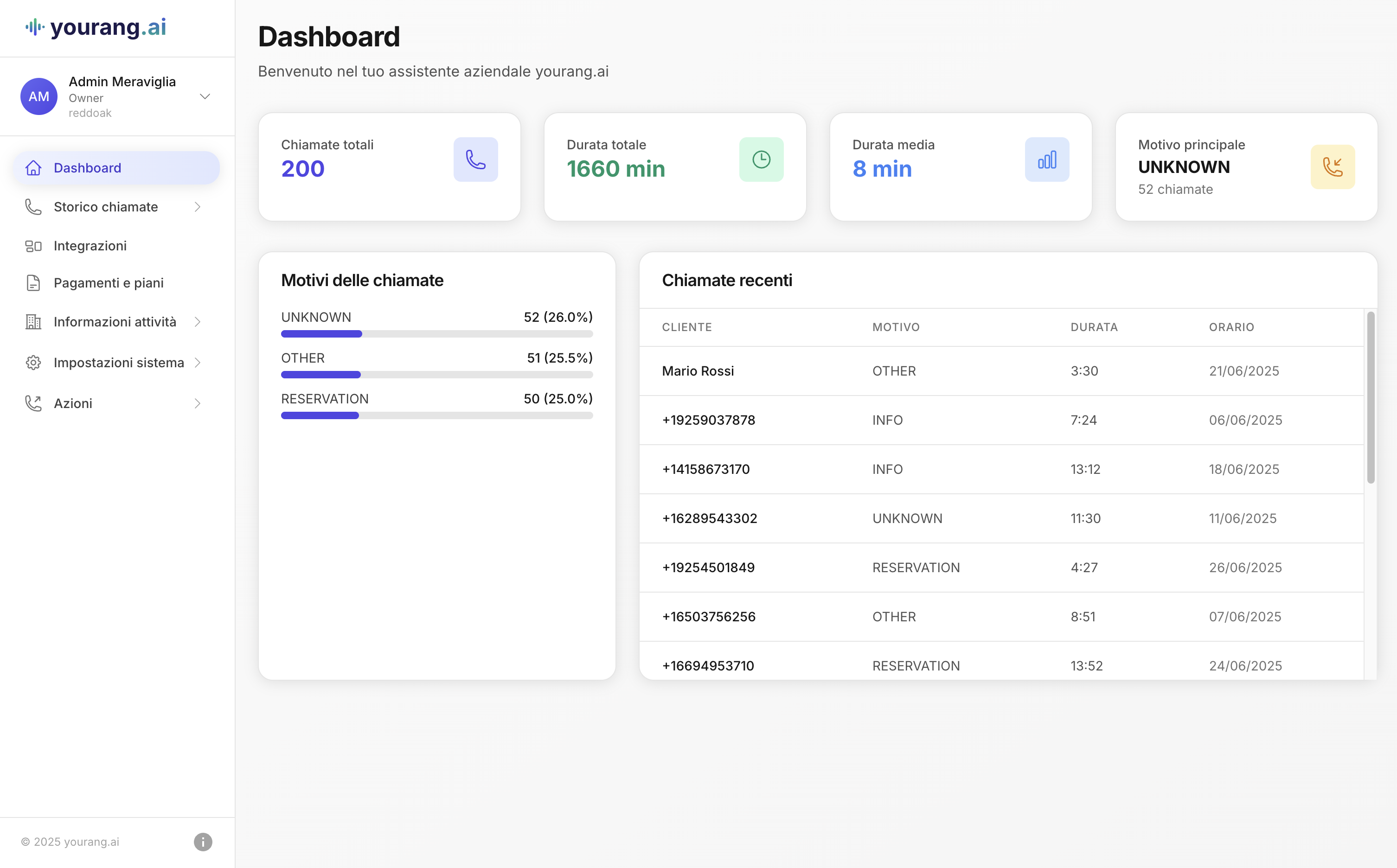
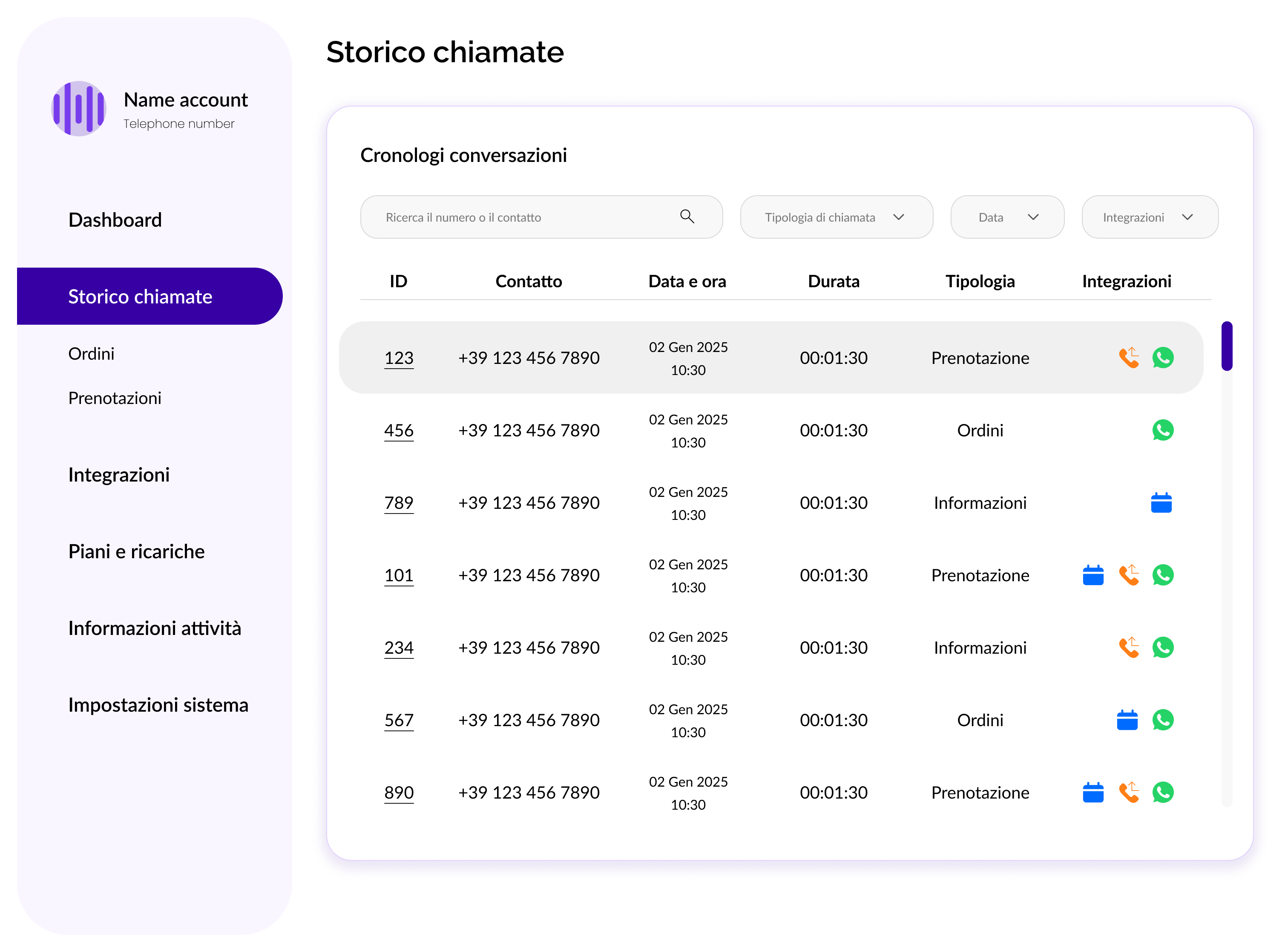
Each call becomes data. A real-time dashboard shows call history and performance, sentiment analysis reads the tone of conversations, and reporting is built around the KPIs a given business actually cares about — turning the phone line from a black box into something you can optimize.
It plugs into your stack
A phone agent is only as useful as what it connects to. yourang integrates with Google Calendar and Calendly for scheduling, WhatsApp and SMS for messaging, CRMs for customer data, and automation platforms like Zapier and n8n — plus a developer API for teams that want to build their own integrations on top.
Under the hood
yourang is a monorepo with a clear split between a Python backend and a TypeScript frontend, and a few deliberate engineering choices hold it together as it scales.
Backend — Python 3.12 / FastAPI
A strictly layered architecture keeps the codebase honest:
API Routes → Service Layer → DB Selectors + External Services
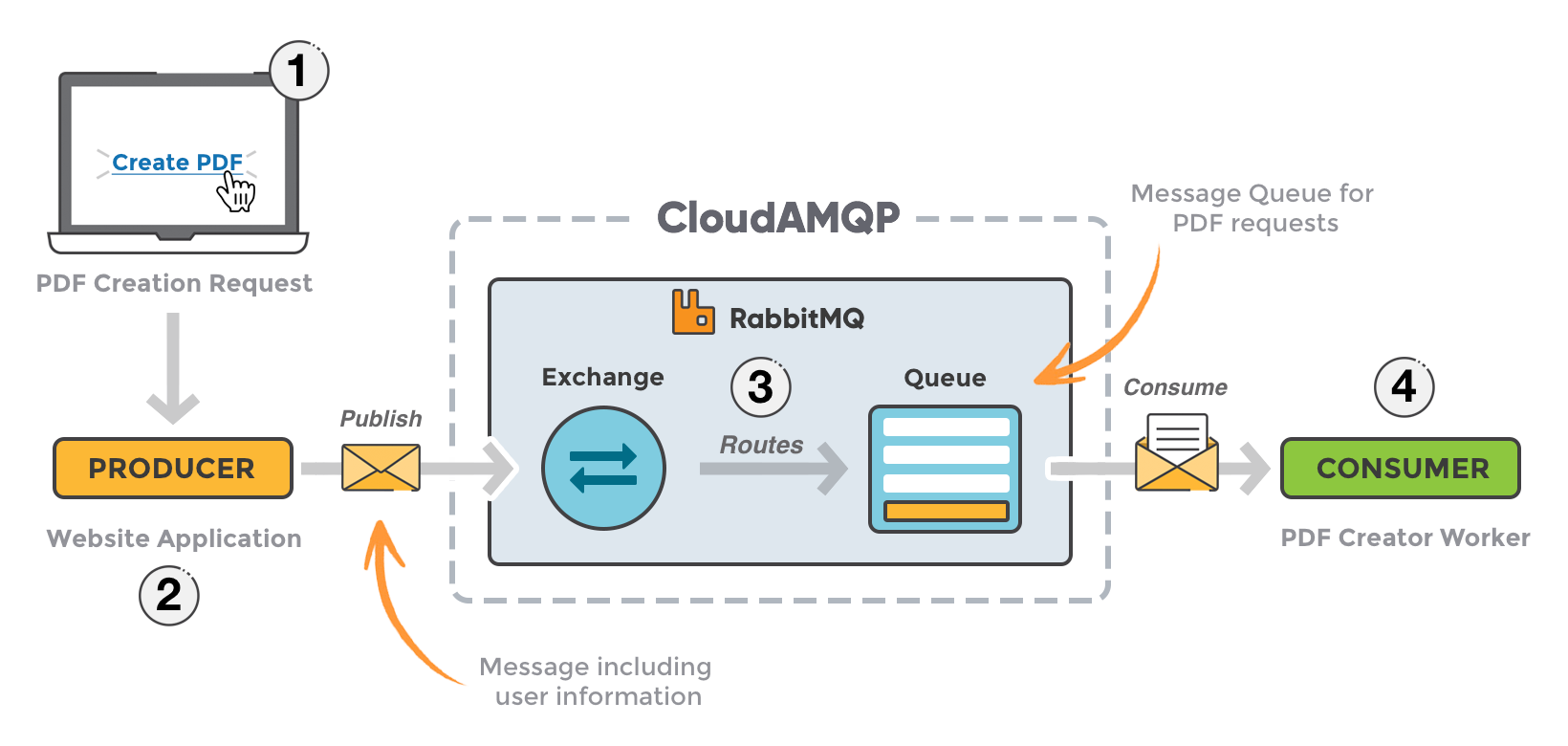
Routes stay thin, business logic lives in services, and all database access funnels through a dedicated selector layer. PostgreSQL holds the data, Redis handles caching and coordination, and Celery on RabbitMQ runs everything asynchronous — call summaries, knowledge indexing, outbound SMS and email, and bulk imports.
Priority queues that respect urgency
Not every background job is equally time-sensitive. A one-time password or a live outbound call has to go out in seconds; a nightly cleanup can wait. So tasks are routed into tiers — CRITICAL, HIGH, NORMAL, LOW, BULK, and an isolated CALLS queue — each with its own latency target. Anything that exhausts its retries lands in a dead-letter queue automatically, so failures are visible instead of silently lost.
The conversation & knowledge layer
The live voice conversation runs on a realtime speech model, while a retrieval-augmented (RAG) knowledge base — backed by a Weaviate vector store — lets the agent answer from each business's own content: menus, policies, price lists, opening hours. Long-running, multi-step processes are orchestrated with Temporal so they survive restarts and retries.
Frontend — Next.js / React 19 / TypeScript
The dashboard is a Next.js App Router app styled with Tailwind and shadcn/ui, with Zustand for client state. Backend and frontend types stay in sync through generated OpenAPI types, so an API change that breaks the contract breaks the build — not production.
White-label and multi-tenant by design
One of the most interesting constraints is that yourang is fully white-label. Resellers run the platform under their own brand, domain, colours, and support details — and an end-user should never see a trace of the underlying platform. That pushes branding out of the code entirely: every brand name, domain, and support email resolves at runtime through a reseller configuration layer, and database routing is tenant-aware so each customer's data lives in its own isolated space. Multi-tenant isolation is treated as a security property, not a feature.
Why it matters
The pitch is blunt because the maths is: a full-time receptionist costs thousands a month and still goes home at night, while an always-on AI line starts at the price of a couple of coffees and answers every call, in every language, at 3am on a holiday. The work that's drawn press attention — from ANSA and Milano Finanza to CNBC — isn't the demo; it's that the unglamorous plumbing underneath holds up: strict layering so the codebase stays changeable, multi-tenant isolation done properly, and a task queue that takes urgency seriously.
The AI conversation is the part people notice. It only works because of the careful engineering behind it — and there's plenty more to write about: the RAG pipeline, the outbound call-center dialer, and the Temporal workflows. Those are posts for another day.
Thanks for reading.