Claude Code Models and Effort Levels: Explained Simply
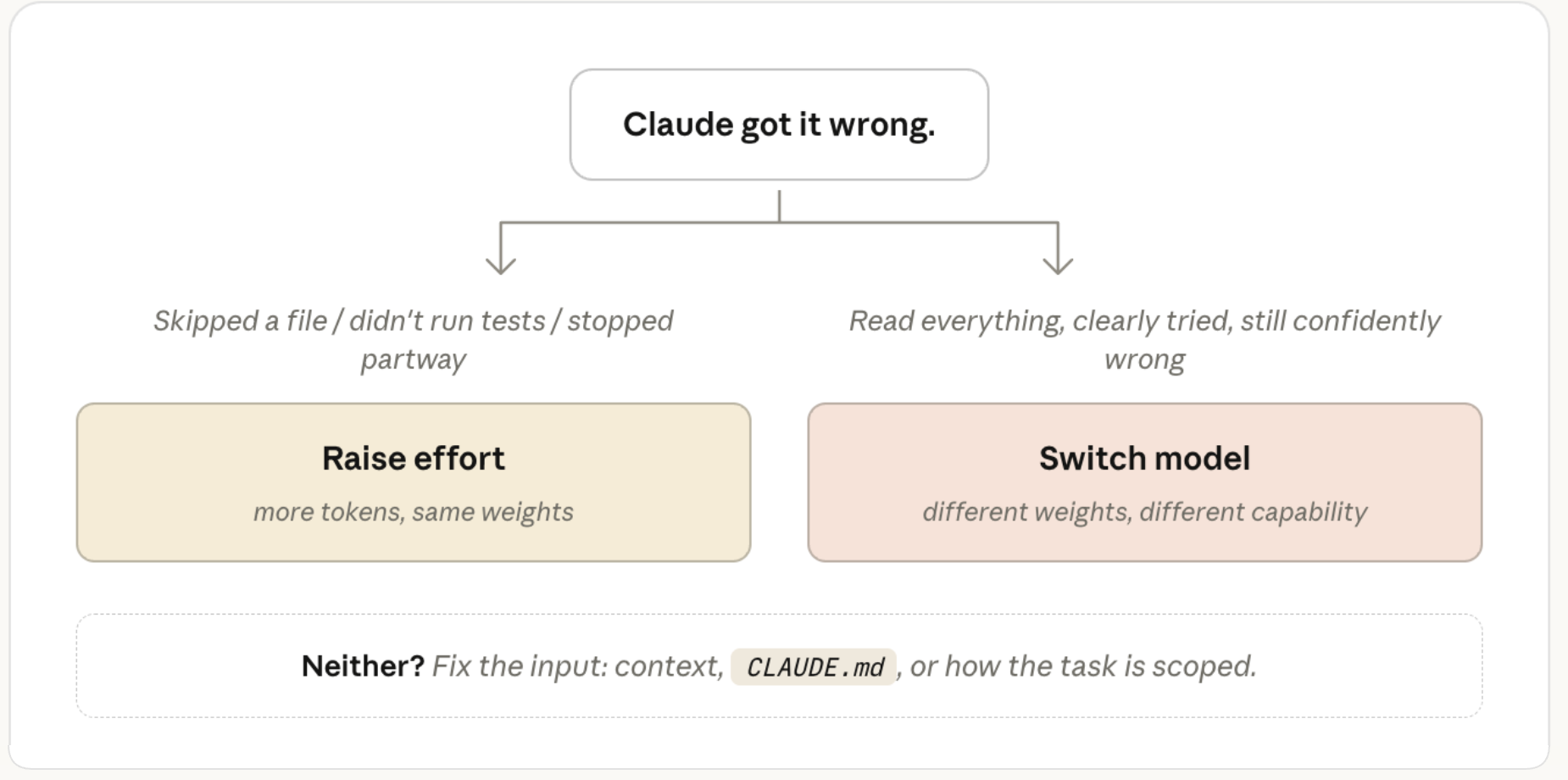
Model selection and effort level solve different problems. The model controls Claude’s underlying capability; the effort level controls how much work Claude does before responding.
8 min read
September 1, 2026 · 3 min read
When Anthropic brought Claude Fable 5 back, the biggest story wasn't just the model itself. It was about how a frontier model could be deployed safely.
Now comes Claude Fable 5.1.
And this release feels less like “here is a smarter model” and more like:
“Here is a model that can do more work, for longer, at a lower cost.”
That difference matters.
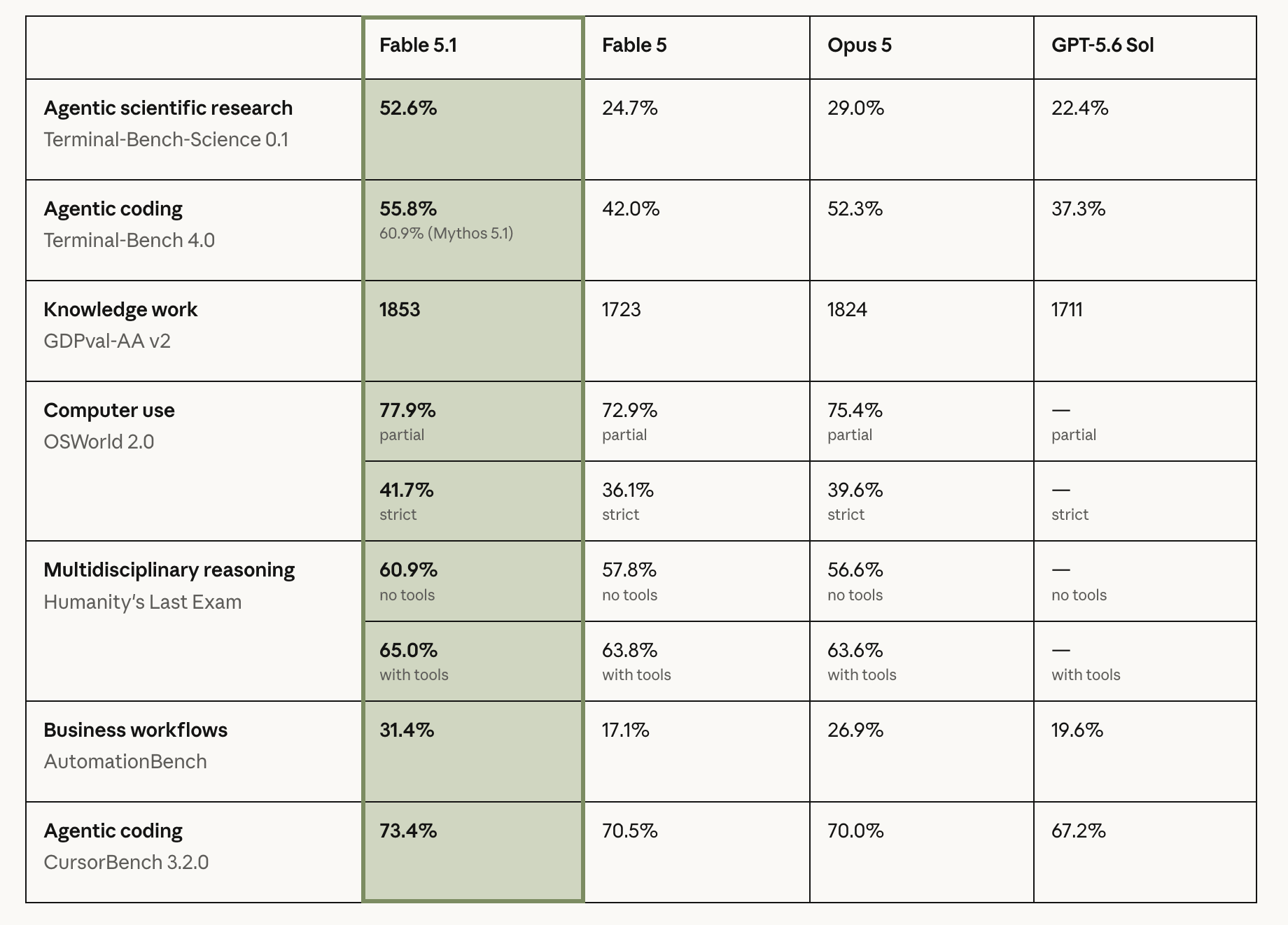
Fable 5.1 improves coding, reasoning, computer use, and long-running agentic tasks.
Some of the gains are substantial.
On Terminal-Bench-Science 0.1, Fable 5.1 scores 52.6%, compared with 24.7% for Fable 5.
On AutomationBench, it reaches 31.4%, compared with 17.1%.
And on CursorBench 3.2.0, it reaches 73.4%.
But benchmarks aren't the part I find most interesting.
Anthropic's early users describe Fable 5.1 working for hours without constant human intervention — investigating problems, writing code, testing results, and continuing through multiple steps.
That is the direction AI agents are heading.
Less prompting. More execution.
Anthropic reduced the price of cache reads by 75%, to $0.25 per million tokens.
For Fable 5.1, Anthropic estimates:
~25% lower cost for typical workloads
up to ~45% lower cost for highly agentic workloads
Why does that matter?
Agents repeatedly reuse context.
They read a codebase, call tools, inspect results, retry, and continue working.
When that repeated context becomes cheaper, running an agent for longer becomes much more practical.
This isn't just a pricing update.
It's an important change to the economics of AI agents.
Anthropic also says Fable 5.1 has more precise safeguards.
For benign biology and medical requests, its latest safeguards trigger 85% less often than the safeguards that launched with Fable 5.
In Claude Code, Anthropic reports around 60% fewer cybersecurity safeguard interventions per session compared with the previous Fable 5 safeguards.
The goal isn't to remove safety.
It's to make safety more precise.
One of the most interesting examples isn't about coding at all.
Anthropic used Fable 5.1 to train a neural network using NASA Magellan radar imagery and existing elevation data to create a higher-resolution elevation map covering roughly one-third of Venus.
Anthropic says the new map can resolve details at around 2–3 km, compared with 10–20 km previously, with heights up to 25% more accurate.
That's a good example of where this technology is heading:
AI isn't only answering questions. It's increasingly helping perform the work behind the answer.
For me, the story can be reduced to four things:
More capable.
More autonomous.
Cheaper to run.
More precise safety.
Fable 5 was about bringing frontier intelligence to users.
And that may be the more important step.
Because the future of AI isn't just:
“Ask the model a question.”
It's increasingly:
“Give the model a problem — and let it work.”
Was this helpful?
Give it a zap to let me know.
Or share it with someone
Model selection and effort level solve different problems. The model controls Claude’s underlying capability; the effort level controls how much work Claude does before responding.

Claude Fable 5 and Claude Mythos 5 were temporarily suspended after the US government applied export controls on June 12, requiring Anthropic to restrict access to foreign nationals. Because Anthropic says it had no reliable way to verify nationality in real time, it suspended both models for all users. Those controls were lifted on June 30, and Fable 5 was restored globally starting July 1 across Claude Platform, Claude.ai, Claude Code, and Claude Cowork.

New model by Google: Gemini 4 Argon that beat OpenAI Astra, Anthropic Fable 5.1, and Opus 5.5.